Turf Zone – Bonnyrigg
Thoughts today turn to the topic of route planning and how to find the most efficient route between a bunch of zones. Many turfers will have a local patch, a collection of zones near their home that they take regularly and I’m no different with my own local patch being Bonnyrigg, located a few miles south of Edinburgh. I’m still following more-or-less the same route I devised around 5-years ago but with additional zones having been added over that time I wondered if my current route is still the most efficient.
Ideally, what I’d love to find is an app that shows all the turf zones, you then select the ones you want and it calculates the most efficient route taking in all those zones, also taking into account your mode of transport and all those little footpath shortcuts you only seem to find afterwards. Yes, there are various online tools and phone apps but I’ve not been able to find anything even close to those requirements. But feel free to advise me otherwise. Some good ones out there for the likes of couriers and delivery drivers but most seem based on postcodes and you need to pay monthly fees as well. So, alas, looks like old brain will have to do the planning.
Turf Zone – SayAhhh
First task was to use the Turf Map Tool and collect a few details on my local patch zones. This shows that I have 43 zones that will give me 7115 points and a PPH of 99. I then used Google maps to determine the distance between all 43 zones. That came to around 17km or 10.50 miles, not including any allowance for additional distance due to slope. That might add another 10%. I then sat down at the computer for many days and nights, trying to see if I could find a more efficient and faster route taking in all 43 zones. And the result? Well, no change whatsoever.
Okay, if my route is reasonably efficient, what other elements of my turf session can I look at? One is my mode of transport, the bicycle. Actually, when I used Google maps to calculate the distance you can pick between different modes of transport and it showed that walking takes four times longer than cycling, So, if I was turfing on foot, I’d certainly look at getting a bicycle. Or two, as you really need one for backup. Oh, and another for off-road cycling.
Turf Zone – SingleCask
There are few things I’ve noticed over 5-years of turfing around Bonnyrigg and that is that the best time to go turfing is the middle of the night, any time between around 1.00 am and 5.00 am. There’s next to no foot traffic at all, no dog walkers, no grannies pushing prams, no joggers, cyclists or horse riders and best of all road traffic is at a minimum. This all adds up to many minutes time saved. No slowing down on the cycleway, no need to wait for traffic at junctions or crossings. Bliss! And you see all the wildlife as well.
One time of day to avoid turfing are school times, including the start of school when pupils are heading to school, school break times and the end of the school day. It’s not only pupils that are getting in everyone’s way but also all those parents who collect their wee monsters in their massive SUV’s. For interest, I recall a rather heated conversation with a 2.5 Range Rover driver one day who claimed there were much safer if involved in an accident. Yes, you might be if you hit a smaller car and kill the driver and their children but less so if you hit another 2.5 Range Rover! Yes, school times are best avoided if possible.
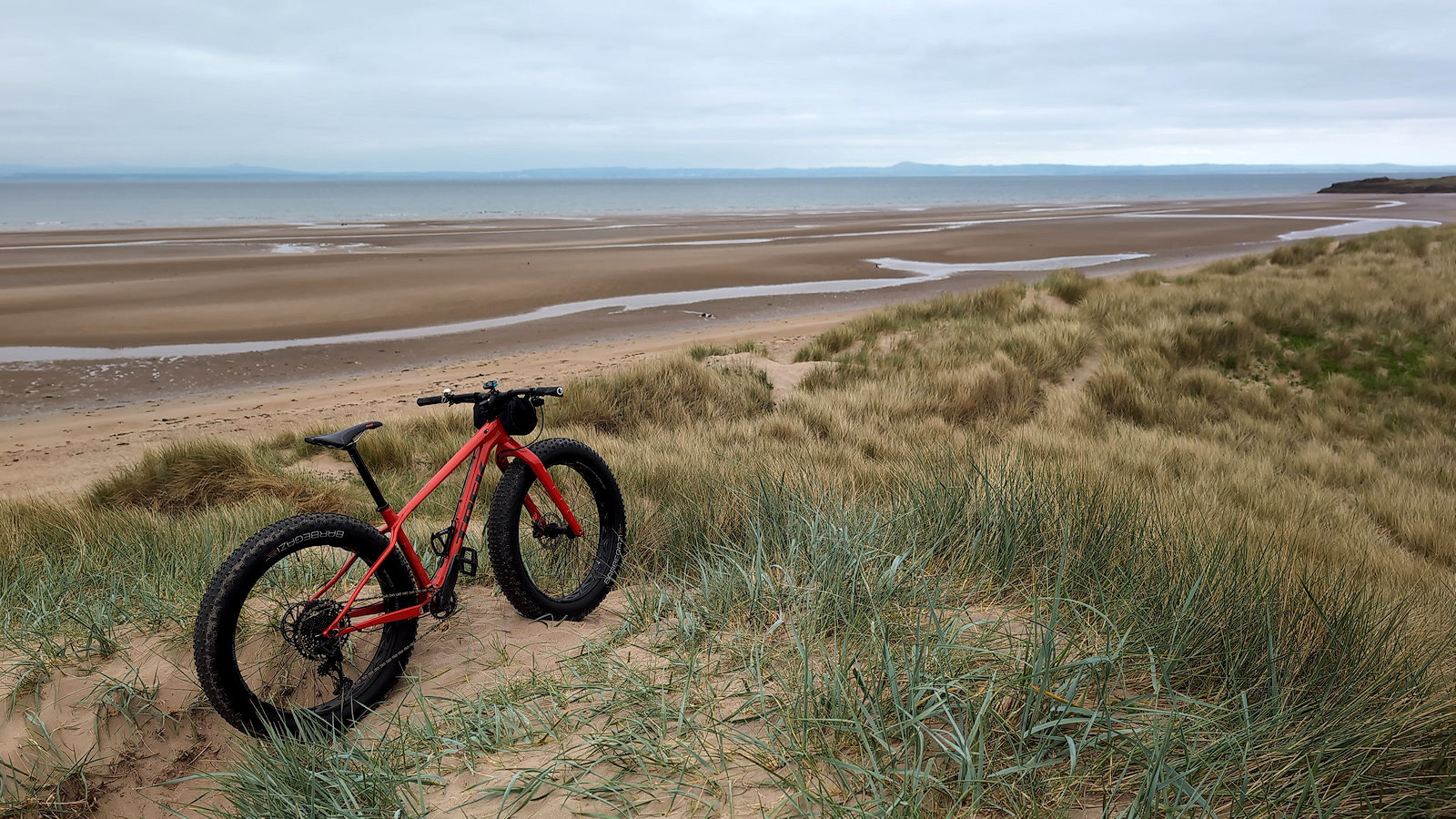
Turf Zone – DuneWithAView
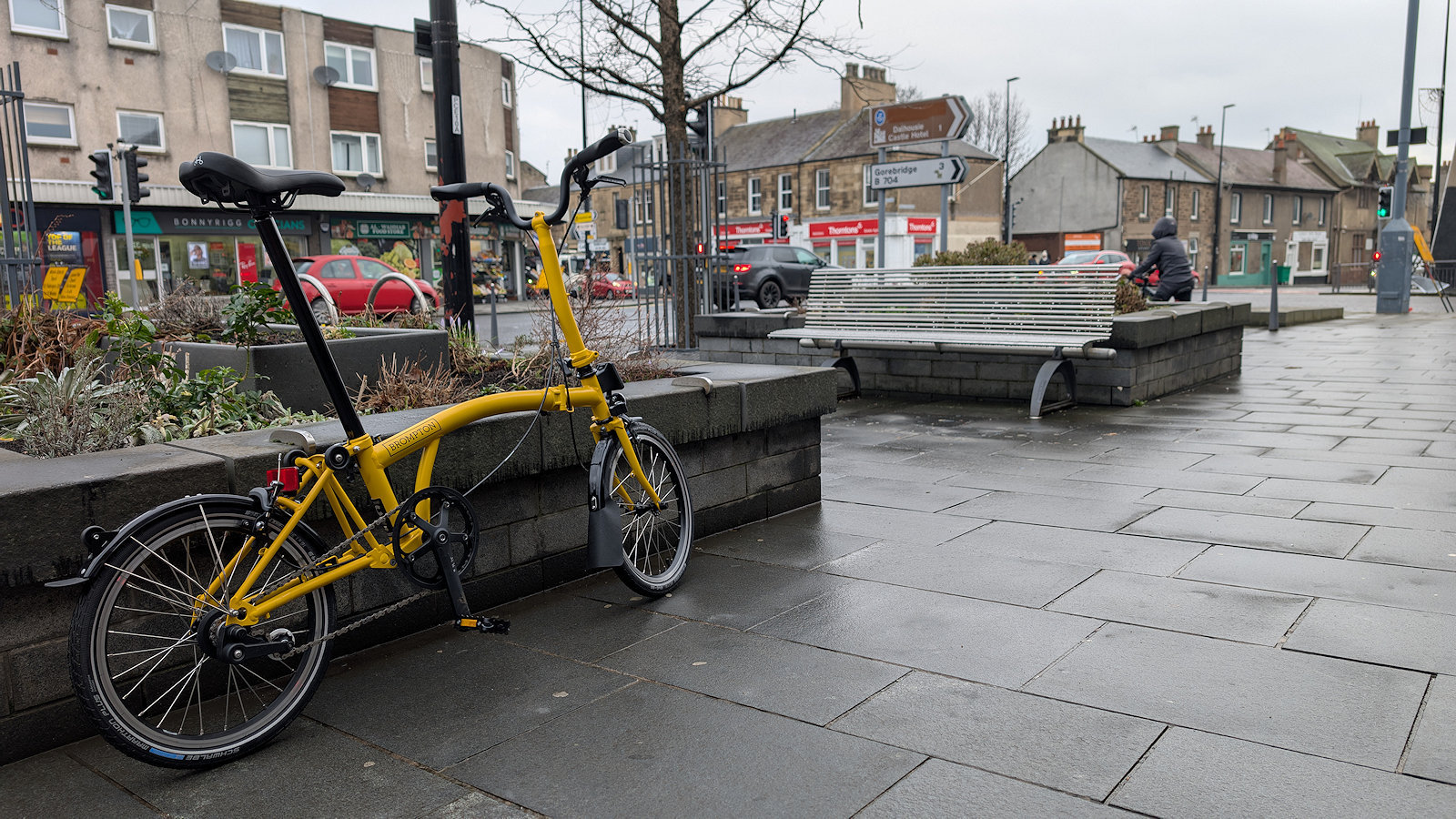
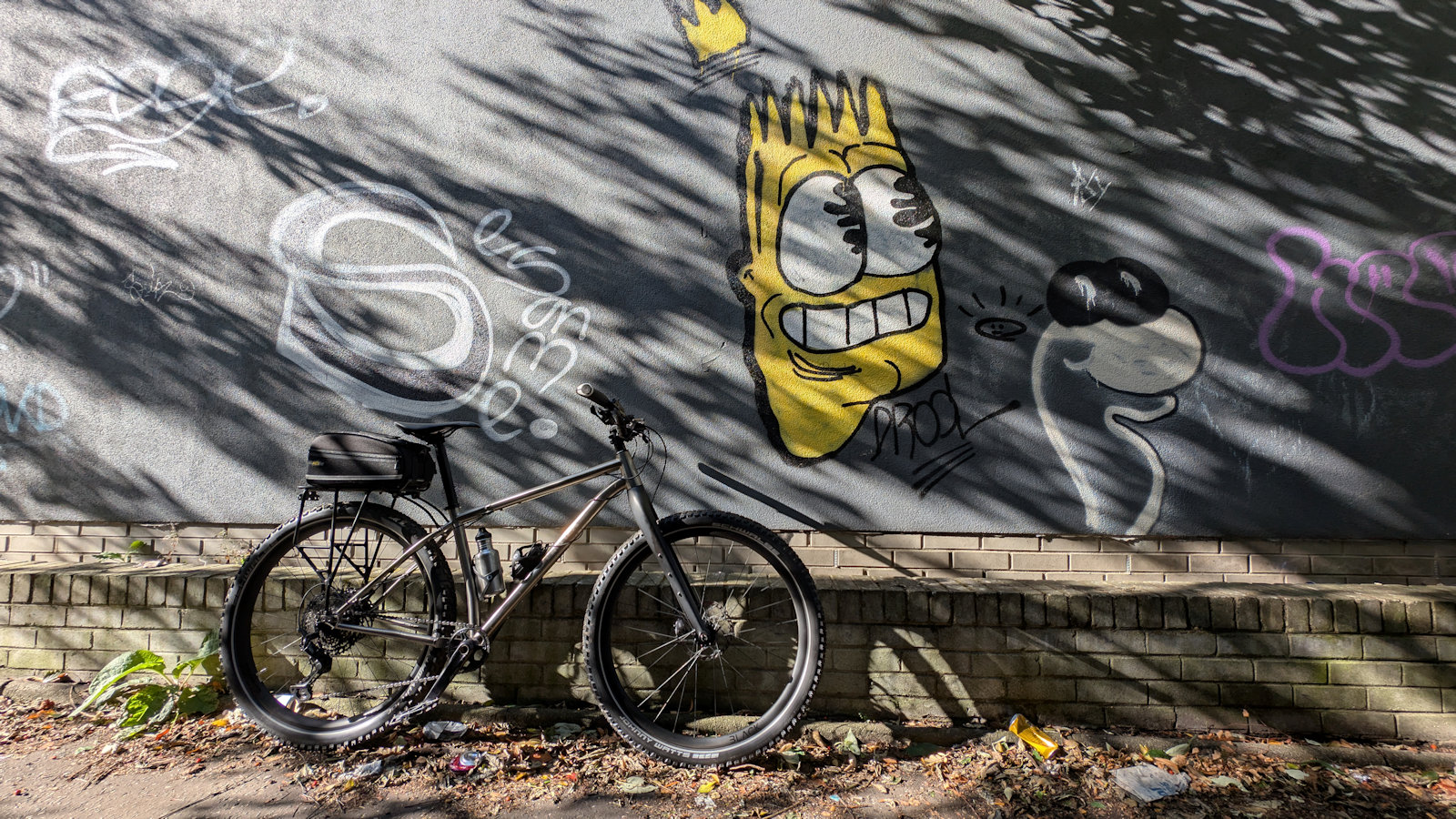
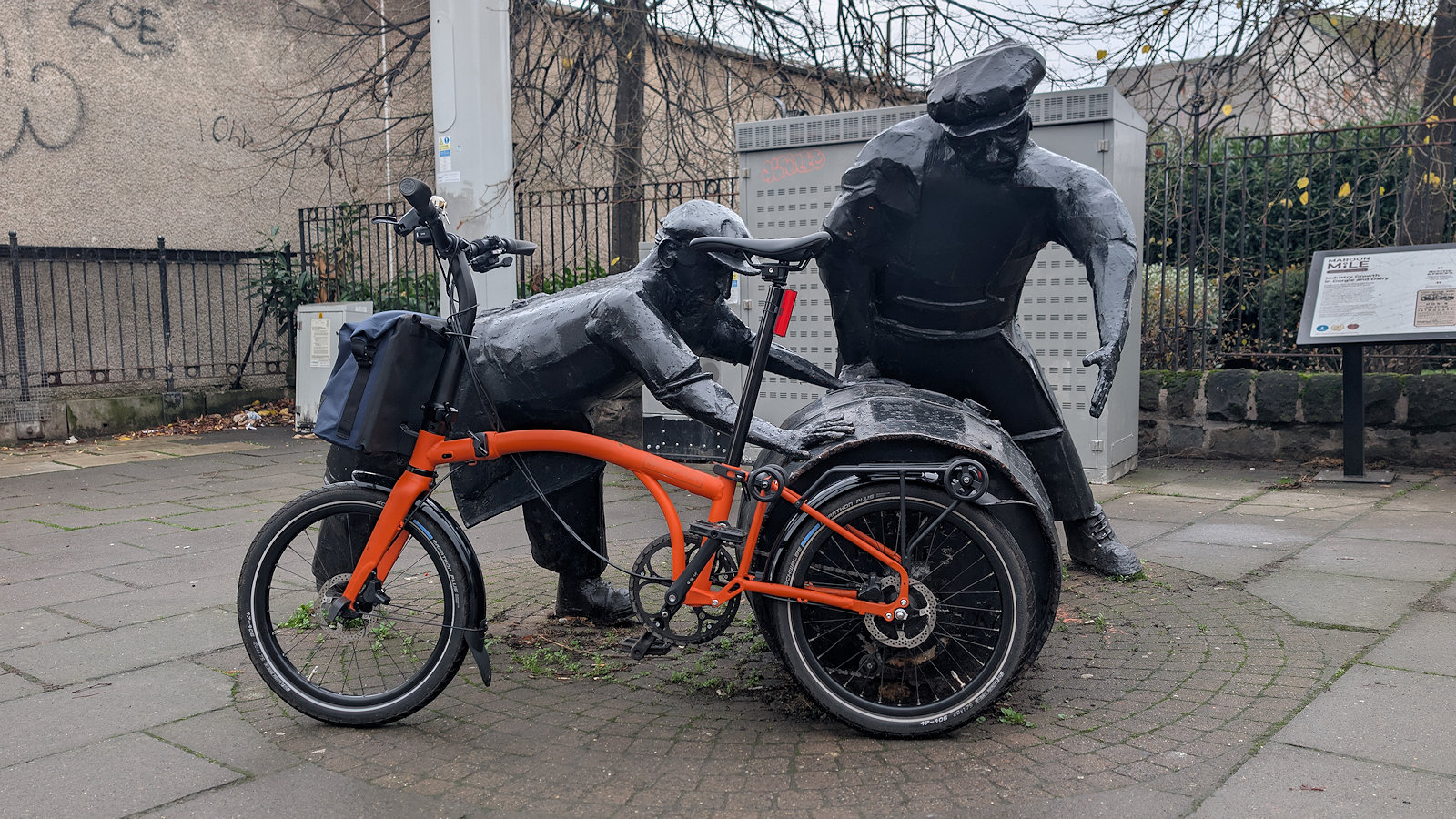
If you were moving from foot turfing to bicycle turfing, what bike would be best? Well, I have, as you might already know, a number of bicycles. But which one have I found the best for bicycle turfing? My folding Brompton is fun and nimble to ride but does not cope all that well with rough terrain, though good for busy cities. My fat bike is built for soft sand and snow so far from ideal in urban areas. My road/gravel bike is fast and efficient but I find the drop bars are not the most comfortable regards my poor back. This leaves my trail bike which I would highly recommend as the best option for all turfing habitats.
It’s been modified somewhat in that regard, all with turfing in mind. It started as a stock Sonder Broken Road titanium wilderness trail bike. At purchase, I specified a rigid carbon-fibre fork rather than the suspension fork it came with, which in my opinion, is un-necessary and saves weight. I also choose the lighter carbon-fibre wheelset which were reduced in the sale. The stock flat handlebars were replaced with 50mm riser bars which made a huge difference to comfort and the heavy dropper seat post was replaced with a standard one as it would never be used. Functional accessories included, bell, phone mount, bottle cages, mudguards, rear rack, rack-top bag and lights.

Turf Zone – Cuningar
As I’ve been thinking about the efficiency of my Bonnyrigg local patch, there are also a few others factors to consider. One is fitness. The fitter you are the faster you can complete your turf session. Other is weight. The less you carry the less energy you expend. And that weight might also extend to yourself, yes, you the turfer. If you are overweight, you are carrying all those extra chocolate/pizza/cake/fish and chips pounds equivalent all the time. Just a thought. Bye for now.
See also Turf Planning.
Copyright ©2026 Gary Buckham. All rights reserved.